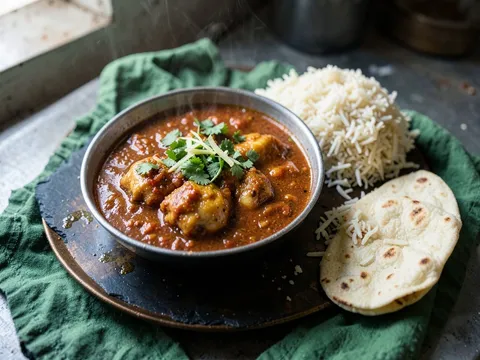
 1 hr 15 minGluten-free
Punjabi Chicken Curry (Dhaba Style)
1 hr 15 min · Medium
By Nomisto Kitchen · Updated
IN SHORT
Most Indian cooking uses about twenty spices, and heat plus timing matters more than the list. Add whole seeds to hot fat for seconds, cook ground spices with a splash of water for under a minute, and add garam masala at the end. Buy small amounts, store them airtight and away from light, and replace ground spices within a year.
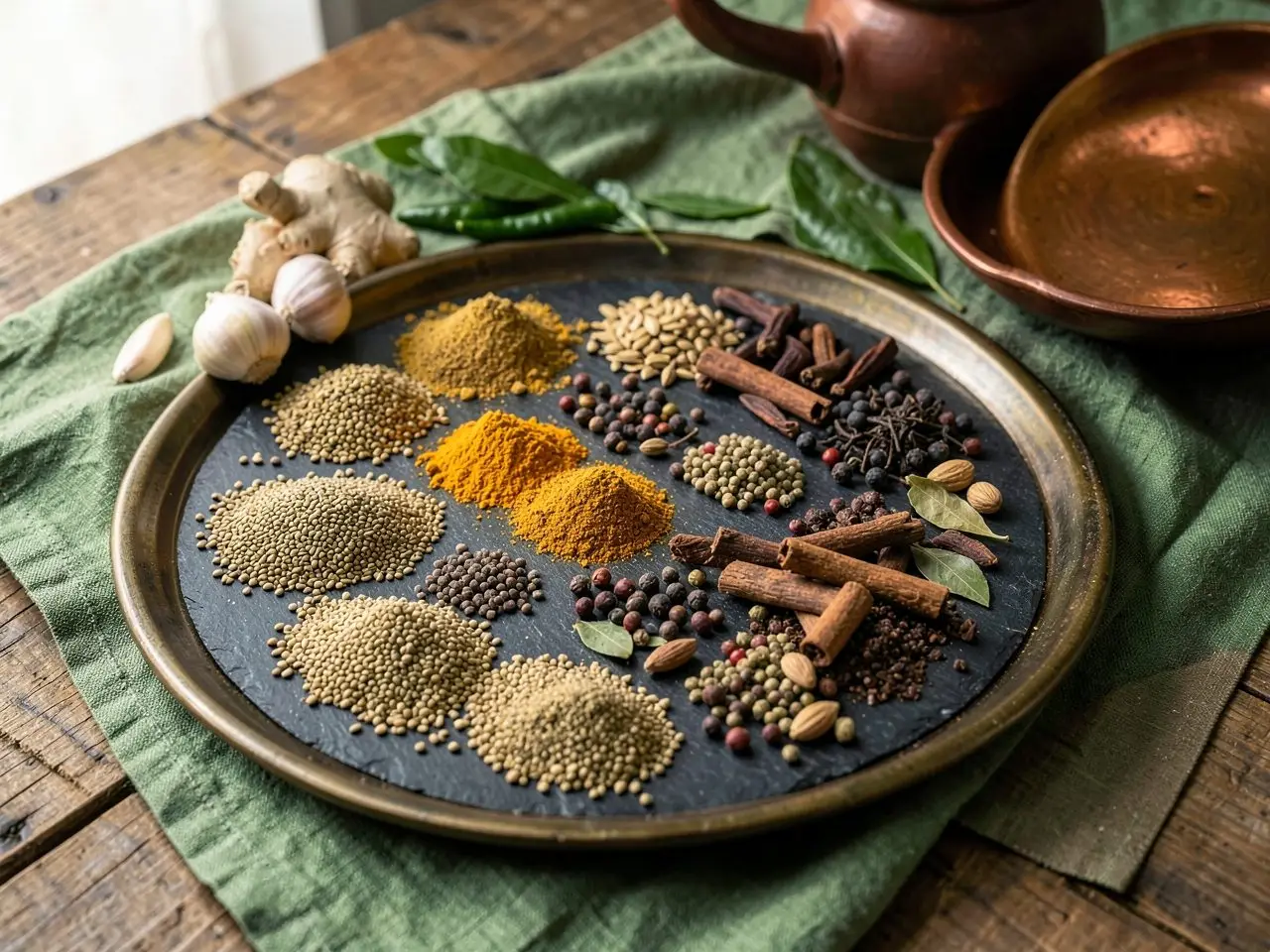
A new cook can feel they need fifty jars. In practice, a working North Indian kitchen runs on a short core, and a South Indian one adds a few more. Start with seven: cumin seeds, coriander seeds (or ground coriander), turmeric, Kashmiri chilli powder, black pepper, green cardamom and garam masala. That covers the Punjabi chicken curry, egg bhurji and most dal and vegetable dishes.
Add mustard seeds, curry leaves, dried red chillies and asafoetida when you want to cook the South and West Indian dishes on this site, such as rava upma and Maharashtrian kanda poha. Cinnamon, cloves, bay leaf and black cardamom come in for rice dishes and slow curries, like the mutton yakhni pulao.
Two other things are worth knowing before you buy. First, “spice” and “heat” are not the same thing: most of the list below adds aroma, colour or earthiness, and only chilli and black pepper bring real heat. Second, a spice is a dried plant part, so its character fades with time. Fresh, small purchases beat a large, old jar every time.
The table below covers the spices used across this site. “How to use” gives the standard approach; timings are guides, so go by the aroma and colour cues.
| Spice | Flavour | How to use | Typical dishes here |
|---|---|---|---|
| Cumin seeds (jeera) | Warm, earthy, nutty | Fry whole in hot ghee or oil for 15 to 20 seconds until darker and fragrant | Punjabi chicken curry, egg bhurji |
| Coriander seeds (dhania) | Citrusy, mild, slightly floral | Buy whole and toast, or use ground in the masala base | Curry bases, yakhni stock |
| Turmeric (haldi), ground | Earthy, slightly bitter, strong yellow | Cook in oil for 30 seconds so the raw taste goes | Kanda poha, most curries |
| Kashmiri chilli powder | Mild heat, deep red colour | Add with ground spices; scorches quickly | Curries, paneer tikka |
| Red chilli powder (regular) | Sharp, hot | Use sparingly; start with a quarter of the amount of Kashmiri | Spicy curries and snacks |
| Black pepper | Pungent, woody heat | Crush fresh, or add whole to stock | Yakhni, anda paratha |
| Mustard seeds (rai) | Sharp, nutty once popped | Add to hot oil until they pop, 15 to 30 seconds | Upma, poha, sambar |
| Fenugreek seeds (methi) | Bitter, maple-like | Use a pinch; fry briefly or soak | Idli batter, sambar powder |
| Kasuri methi (dried leaves) | Savoury, slightly bitter | Crush between palms and add at the end | Chicken curry, paneer tikka |
| Fennel seeds (saunf) | Sweet, anise-like | Whole in stock or toasted into masalas | Yakhni, some garam masala blends |
| Ajwain (carom seeds) | Thyme-like, sharp | Add to batters or hot oil; a little goes far | Besan batters, pakoras |
| Asafoetida (hing) | Savoury, onion-garlic-like | A pinch in hot oil for 5 seconds | Dals, sambar |
| Green cardamom | Sweet, floral, camphor-like | Crack pods whole for stocks; grind seeds for sweets | Mango lassi, rice kheer, yakhni |
| Black cardamom | Smoky, resinous | Use one pod whole in savoury dishes only | Pulao, slow curries |
| Cinnamon / cassia | Sweet, warm | Use a short stick whole in hot fat or stock | Pulao, lamb curry |
| Cloves | Intense, numbing, sweet | Use 2 to 4 whole; strong enough to dominate | Pulao, garam masala |
| Bay leaf (tej patta) | Mild, cinnamon-like | Add whole to stocks and rice; remove before serving | Pulao, lamb curry |
| Curry leaves | Citrusy, savoury, slightly smoky | Add fresh to hot oil for 10 seconds; stand back | Upma, poha, meal prep |
| Amchur (dried mango powder) | Sour, fruity | Add near the end for tang | Chaat, stuffed breads |
| Garam masala | Warm, sweet, aromatic | A teaspoon added in the last 2 minutes | Most North Indian curries |
Curry leaves are a fresh herb rather than a spice, but they sit in the same tempering step, so they live here.
Whole spices protect their volatile oils inside the seed or bark. Once ground, the surface area explodes and the aroma fades in months, not years. That is the whole argument for buying whole cumin, coriander, black pepper and cardamom and grinding small amounts in a cheap blade grinder kept for spices.
Ground is the better choice for turmeric, chilli powder and sometimes ground coriander, because they are hard to grind well at home and are used in sizeable amounts. Buy them in packs that you will finish in a few months, and look for a vivid colour: dull, brownish chilli powder or pale turmeric is old.
Whole and ground are not interchangeable one-to-one, and freshly ground spice is usually stronger than old pre-ground, so start with a little less and taste once the dish is simmering.
Tadka is the technique that most defines the flavour of Indian home cooking. It means heating fat, frying whole spices (and sometimes dals, curry leaves or garlic) in it for seconds, and then either starting the dish in that fat or pouring the sizzling mixture over a finished dal, raita or chutney.
Fat is the carrier. Many of the flavour compounds in spices dissolve in oil but not in water, so frying them briefly in ghee or oil spreads the flavour through the whole dish. Water-based cooking alone leaves much of it behind.
The sequence matters, because each ingredient scorches at a different speed:
For a dal tadka made as a finishing step, heat ghee in a small pan, fry cumin, dried chilli and garlic for 20 to 30 seconds, then pour it over the dal and cover for a minute so the aroma settles.
Think in three stages.
Stage one, whole spices in fat (the first 30 seconds). Cumin, mustard, cardamom, cloves, cinnamon, bay and dried chillies. They flavour the oil that every other ingredient will cook in.
Stage two, ground spices in the masala (the middle). Turmeric, coriander, Kashmiri chilli and ground cumin go in after the onions, ginger and garlic have cooked, and before the tomatoes. Keep the heat at medium-low, stir for 30 seconds, and add a tablespoon or two of water if they start to catch. This is the same order the bhuna masala guide uses. Cooking them in oil removes the raw, dusty taste. Cooking them dry, or too long, makes them bitter.
Stage three, finishers (the last 2 minutes). Garam masala, kasuri methi, amchur, chaat masala, fresh coriander and lemon juice. Their aromatics are delicate and evaporate with long cooking, so they go in at the end.
Three simple techniques cover almost every case.
Dry toasting takes whole spices in a dry pan over medium-low heat for 1 to 3 minutes, shaking constantly, until they darken by a shade and smell strongly. Cumin and coriander seeds are usually ready when you can smell them from a step away. Tip them straight onto a plate to cool, because they keep cooking in the hot pan. Let them cool fully before grinding, or the powder clumps from the residual heat and oil.
Blooming in fat is the tadka stage above: spices in hot oil for seconds.
Grinding works best in small batches. Use a spice grinder or a mortar and pestle, and pulse until it is a fine powder. Sieve out the husk fragments if you want a very smooth masala. Wipe the grinder with a dry paper towel afterwards, or grind a spoonful of rice to clean it.
Garam masala means “warm spice blend”, and every household and region has its own. This version is a Punjabi-leaning, mildly sweet blend that works with the curries on this site. It is a starting point, not the definitive recipe.
| Spice | Weight |
|---|---|
| Cumin seeds | 10 g |
| Coriander seeds | 15 g |
| Black peppercorns | 5 g |
| Green cardamom seeds (from about 12 pods) | 2 g |
| Black cardamom seeds (from 1 large pod) | 1 g |
| Cinnamon or cassia stick, broken | 6 g |
| Whole cloves | 3 g (about 30) |
| Bay leaf, torn | 1 small leaf |
| Mace blade or a pinch of grated nutmeg (optional) | 0.5 g |
Use about 1 teaspoon (2 g) for a dish serving four, stirred in at the end. It will be at its best for around three months. After that it still works but tastes duller, so make small batches.
Heat, light, air and moisture are the enemies. Store spices in airtight jars in a cool, dark cupboard away from the hob, not on a rack above it. Always use a dry spoon, because steam and damp fingers invite clumping and mould.
| Type | Approximate good-flavour life | Notes |
|---|---|---|
| Whole spices | Around 2 years | Cinnamon, cloves and cardamom keep longest in the pod or stick |
| Ground spices | 6 to 12 months | Chilli and turmeric lose colour first |
| Homemade garam masala | About 3 months | Make small batches |
| Hing | 1 to 2 years | Keep tightly sealed, as the smell travels |
| Curry leaves | 1 week in the fridge; can be frozen | Dried leaves have little flavour |
| Kasuri methi | About a year | Crush before use to revive it |
Those periods are rules of thumb rather than a safety limit: old spices are usually safe, just weak. The test is simple: rub a pinch between your fingers and smell it. If it is faint, use more or replace it.
When buying, choose shops with high turnover, such as Indian grocers, where stock moves quickly. Prefer small packs. Mark the date on the jar when you open it.
Mustard is a recognised allergen in many countries, including the UK and EU, and is a base ingredient for tempering across South India. If you cook for someone with a mustard allergy, replace mustard seeds with cumin seeds, avoid mustard oil, and check that masala blends and pickles do not contain mustard.
Asafoetida (hing) is commonly sold compounded with wheat flour, so it can contain gluten. Look for a rice-flour or gluten-free label if that matters. Some commercial spice blends also contain anti-caking agents, flour or nut-derived ingredients, so check labels on pre-mixed products such as curry powder and chaat masala.
Whole spices from different suppliers can share a facility with nuts, sesame or other allergens. If someone you cook for has a severe allergy, check the packaging for allergen statements rather than assuming.
Start with the curry base (bhuna masala) guide to see how ground spices work inside a masala, and the pantry essentials guide for the rest of what to stock. Then cook the Punjabi chicken curry or kanda poha for a first full run through the techniques above.
1 hr 15 minGluten-free1 hr 15 min · Medium
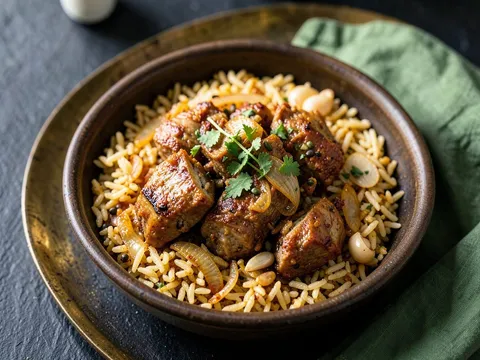 2 hrHigh-protein
2 hr · Medium
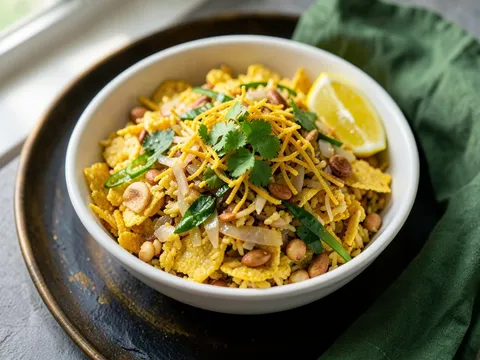 27 minVegetarian
27 min · Easy
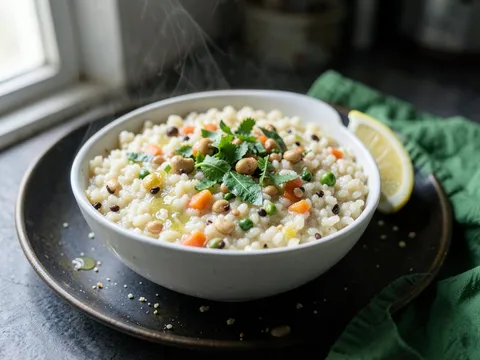 30 minVegetarian
30 min · Easy
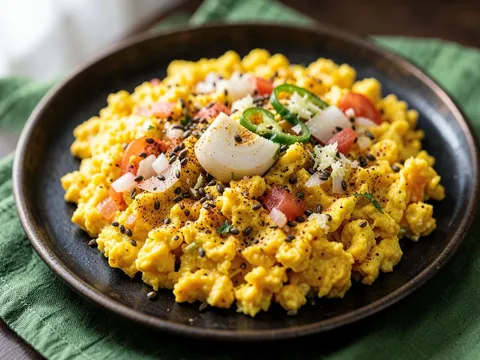 22 minGluten-free
22 min · Easy
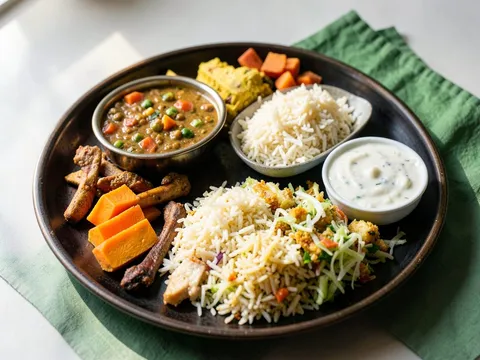 1 hr 45 minVegetarian
1 hr 45 min · Medium
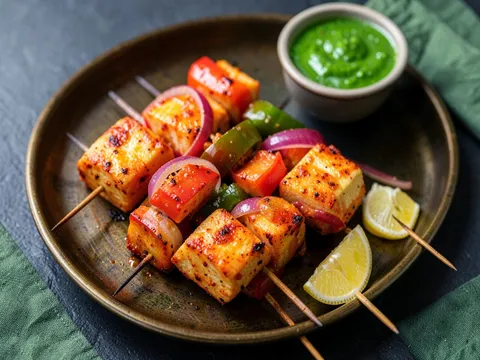 1 hr 5 minVegetarian
1 hr 5 min · Easy
 5 minVegetarian
5 min · Easy
Whole spices keep their flavour much longer, so buy whole cumin, coriander, black pepper and cardamom if you cook often and can grind them yourself. Ground turmeric, chilli powder and ground coriander are fine to buy ready-made, in small packs you will use within a year.
They are the same technique under two names. Tadka or chhaunk (Hindi), baghar (Urdu), popu (Telugu), oggarane (Kannada) and thalippu (Tamil) are all the same technique, which English calls tempering. It means heating fat, frying whole spices in it for seconds, and pouring the result over a dish or using it as the start of one.
Spices scorch fast. Mustard seeds, ground chilli and ground coriander turn bitter within seconds on high heat. Take the pan off the heat when seeds darken, keep ground spices on medium-low, and add a tablespoon of water if the pan looks dry.
Garam masala is a warm, aromatic finishing blend added at the end of cooking curries. Chaat masala is a tangy, salty blend that usually includes amchur (dried mango powder) and black salt, sprinkled over snacks, fruit and fried foods such as pakoras just before eating. They are not interchangeable.
Often not. Many commercial hing products are compounded with wheat flour, though rice-flour and pure resin versions exist. Check the label if you avoid gluten, and use a pinch only, as it is very strong.
Curry powder is a Western blend rather than a traditional Indian one, and it tastes different from cooking with separate spices. It will work in a pinch in a simple dish, but it will not give the layered flavour of cumin, coriander, turmeric and chilli added at different stages.