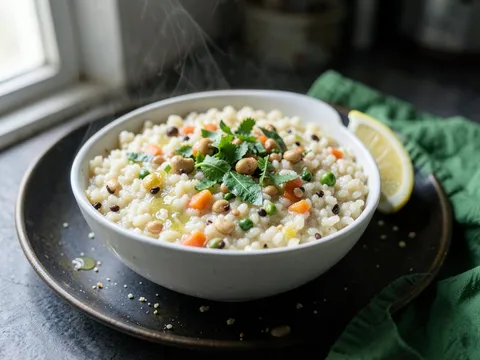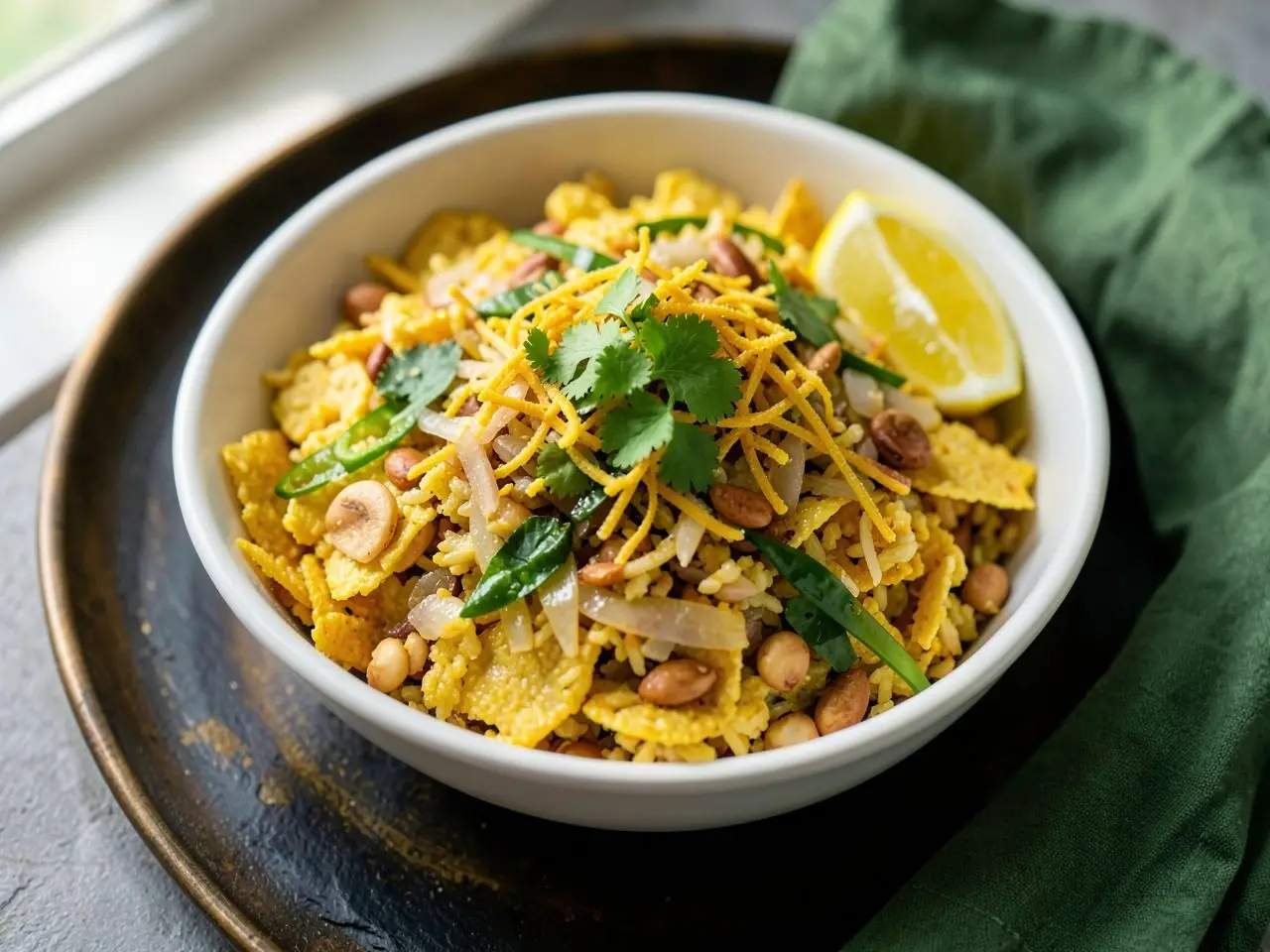
Kanda poha, “kanda” being the Marathi word for onion, is a Maharashtrian breakfast of flattened rice cooked with onion, peanuts and curry leaves. It is also sold at street stalls across western and central India, especially in Indore, where it comes with sev and lemon. It cooks in one pan in under half an hour.
Why this recipe works
- Rinsing and draining the thick poha softens it with just its own moisture, so the flakes stay separate and do not turn to paste.
- Tempering in order (peanuts, then mustard seeds, then curry leaves and chilli) builds flavour and keeps each ingredient from scorching.
- A short covered steam finishes the poha evenly without adding water that would make it mushy.
Method
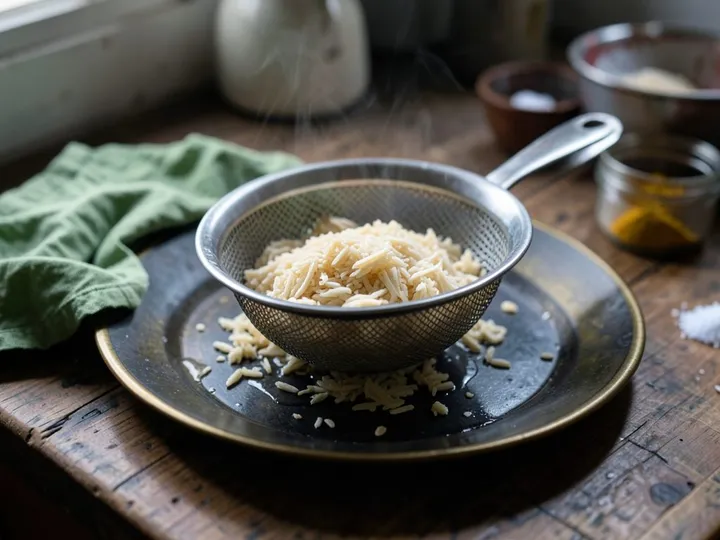
Put the poha in a colander and rinse under cold running water for 20 to 30 seconds, tossing it with your hand, until the flakes bend easily but are still whole. Drain for 5 minutes, then toss with the turmeric, salt and sugar. Taste before serving, as sev adds salt.
Tip: Thick poha needs the full drain time. If it feels hard in the middle, sprinkle on 1 to 2 tablespoons of water and rest it 2 more minutes.
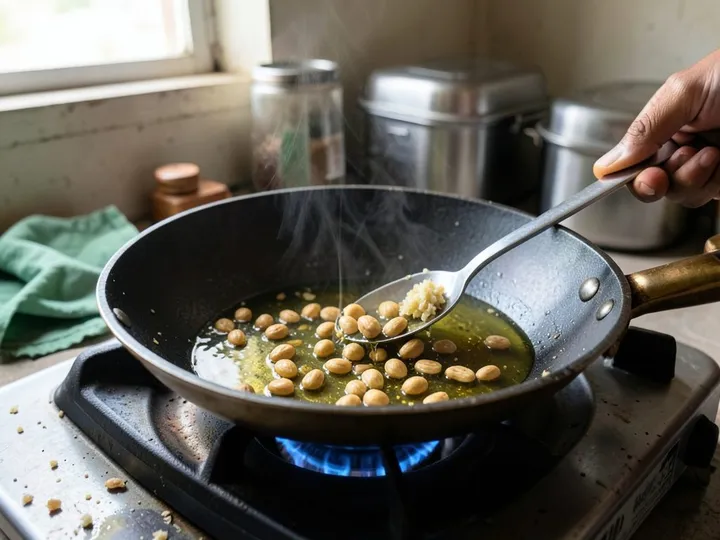
Heat the oil in a wide kadai or non-stick pan over medium heat. Add the peanuts and fry for 2 to 3 minutes, stirring, until golden and crisp. Lift them out with a slotted spoon and set them aside.
In the same oil, add the mustard seeds and let them pop for 15 to 30 seconds. Take the pan off the heat briefly if they start to darken, as mustard seeds scorch quickly.
Add the curry leaves and green chillies and stir for about 10 seconds, standing back because they spatter, until the leaves are crisp and translucent.
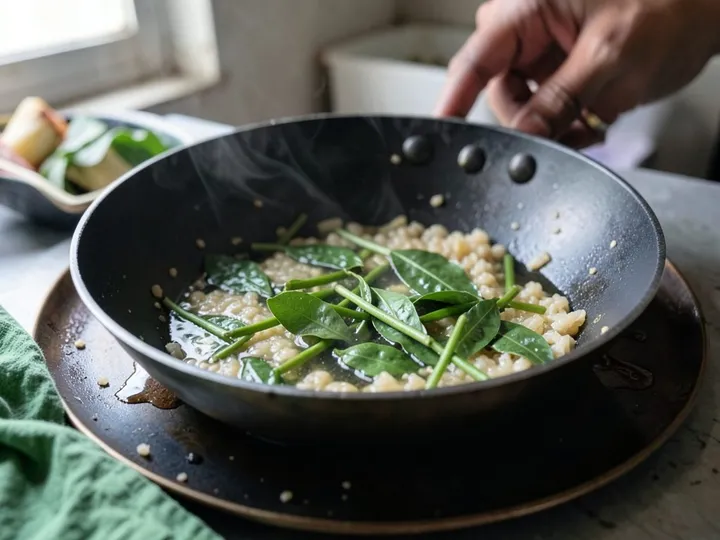
Add the onion and cook for 3 to 4 minutes, stirring often, until soft and translucent with no brown edges.
Add the seasoned poha and fold it in gently with a flat spoon for 1 minute so it turns evenly yellow without breaking up.
Reduce the heat to low, cover and steam for 2 minutes, until the poha is hot through, soft and fluffy.
Turn off the heat. Stir in the lemon juice, coriander and fried peanuts, and serve at once, topped with sev if you like.
Swaps & substitutions
- Raw peanuts → Roasted cashews (30 g): Fry for 1 minute until pale gold. Use this for a peanut-free version, but note that cashews are a tree nut.
- Sev → Grated fresh coconut (2 tbsp): A softer finish for a Maharashtrian-style plate; add it with the coriander.
- Neutral oil → Ghee (2 tbsp): Adds a richer flavour, but then the dish contains dairy.
Storage & reheating
Poha is best eaten straight away because the flakes harden as they cool. Cool leftovers within 1 hour and refrigerate in an airtight container for 1 to 2 days. Reheat once with a splash of water in a covered pan until steaming hot all the way through. Keep the peanuts and sev separate so they stay crisp.
Frequently asked questions
Why is my poha mushy?
It was soaked too long or in too much water. Rinse thick poha for only 20 to 30 seconds, drain it for 5 minutes and handle it gently, folding rather than stirring hard.
Why is my poha hard or dry?
The flakes did not get enough moisture. Sprinkle on 1 to 2 tablespoons of water, cover and steam for 2 minutes. Thin poha needs a shorter rinse than thick poha.
Which poha should I buy?
Use thick poha, sold as jada poha, for kanda poha. Thin poha dissolves in rinsing and suits chivda or dishes where it is simply sprinkled with water.
Why is this dish called Indori in some places?
In Indore, poha is usually steamed rather than pan-tossed and finished with jeeravan masala, sev and pomegranate; this recipe follows the Maharashtrian kanda poha style.
Which allergens does this contain?
It contains peanuts and mustard. Sev is made from gram flour and may be fried in shared oil, so check the label, and sev often contains hing, which usually contains wheat flour. This recipe uses no hing; most hing contains wheat flour, so check the label if you add it.
Nutrition
| Calories | 522 kcal |
|---|---|
| Protein | 11 g |
| Carbohydrates | 64 g |
| Fat | 26 g |
| Fibre | 4 g |
| Sodium | 710 mg |
More in Indian Street Food Recipes and Breakfast Recipes. Learn the technique: Indian Spices: A Practical Guide, The Indian Pantry: 25 Essentials.