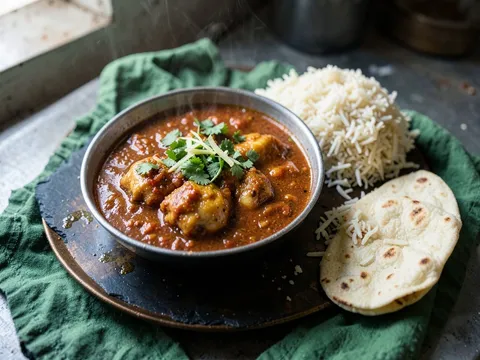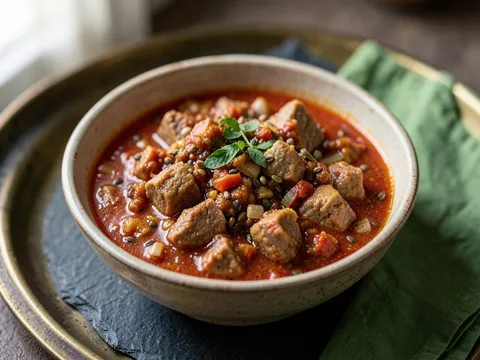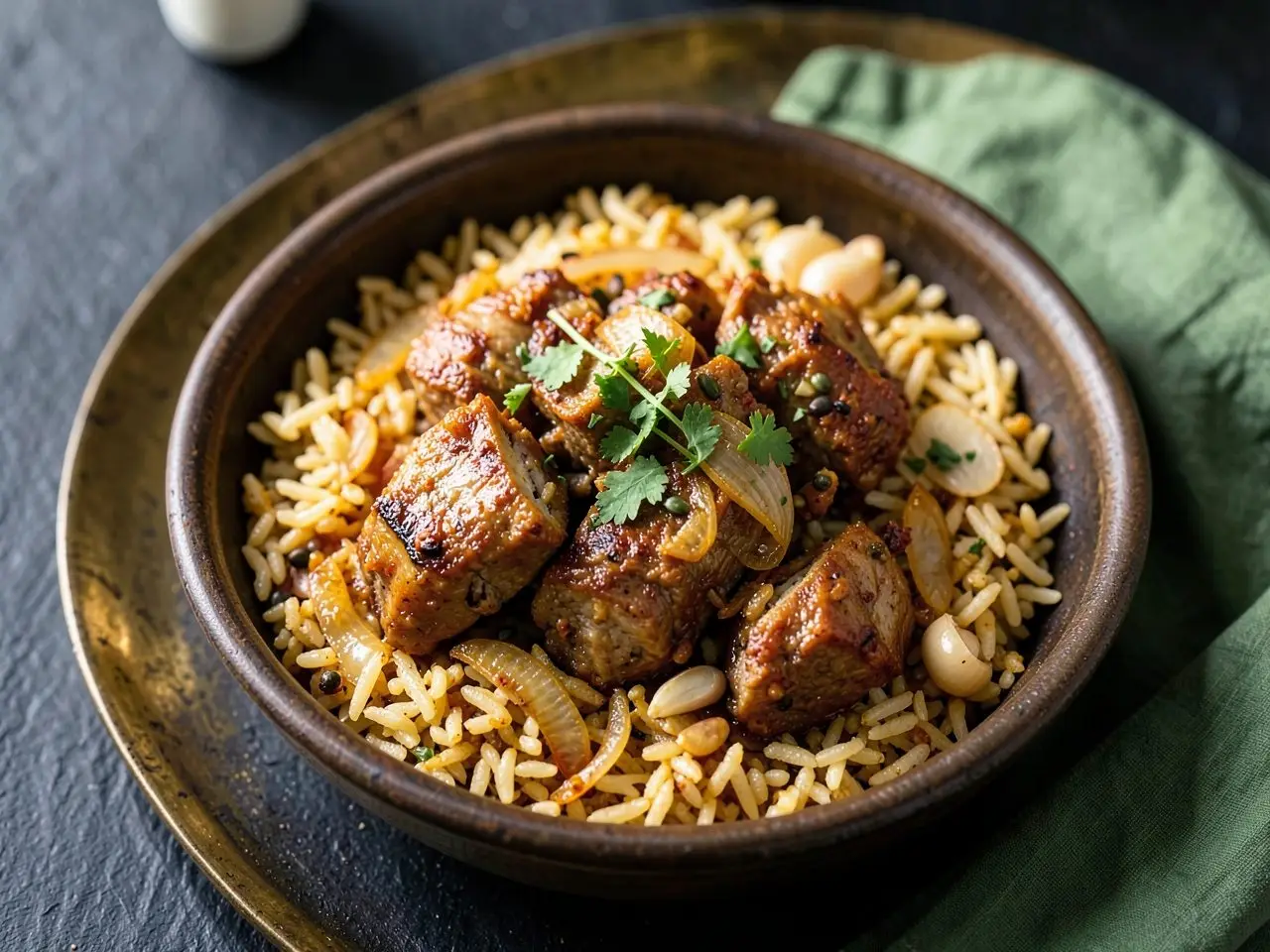
Yakhni pulao is a rice dish built on its own stock: mutton is simmered with fennel, whole spices, ginger and onion, and the strained broth then cooks the rice. It is a staple of Awadhi and Kashmiri home cooking, where the pulao is delicately spiced rather than hot.
Why this recipe works
- Cooking the rice in strained yakhni puts the flavour of the meat and spices into every grain, so the dish needs little masala.
- A measured 550 ml of stock to 300 g of soaked basmati, followed by a 10-minute rest, gives separate, fluffy grains.
- Browning the onions and the mutton before the rice goes in adds depth that a plain boiled stock cannot.
Method
Tie the coriander seeds, fennel, green and black cardamom, cinnamon, cloves, peppercorns and bay leaf in a square of muslin to make a potli. Put it in a pressure cooker with the mutton, water, onion, ginger, garlic and salt. Bring to a boil and skim off any grey foam from the surface.
Close the lid and bring to full pressure on high (first whistle), then lower to medium-low and cook 25 minutes. Let the pressure release naturally for 15 minutes.
Tip: Natural release keeps the meat tender. Open the lid only when the pressure valve has dropped.
Strain the yakhni through a sieve into a jug and lift out the mutton. Discard the potli, onion, ginger and garlic. Measure 550 ml of yakhni, topping up with hot water if short or boiling it down if there is more. Taste it: it should be clearly salty, like a seasoned soup, so add a pinch of salt if it is flat. Keep a few spoonfuls of extra hot yakhni aside for step 7.
Heat the ghee in a heavy 3 to 4 litre pot over medium heat. Add the sliced onions and fry for 10 to 12 minutes, stirring, until evenly golden brown, not dark. Lift out about a quarter of the onions for garnish.
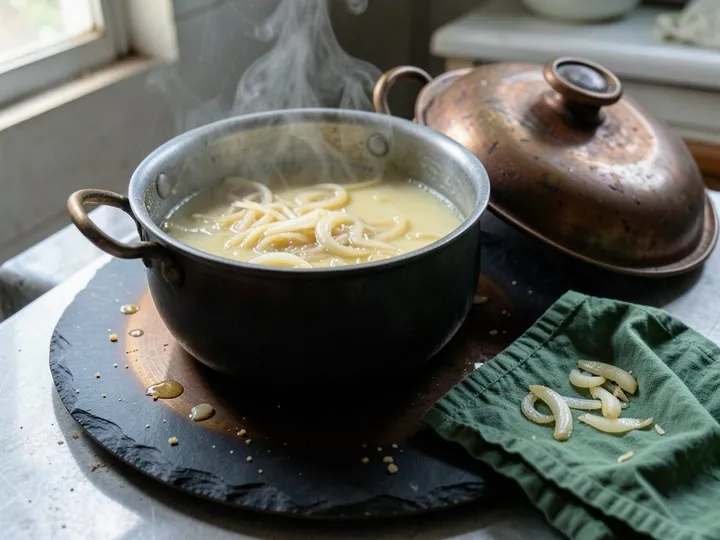
Add the cumin seeds and the mutton and fry for 3 to 4 minutes until lightly browned. Take the pot off the heat for 30 seconds, stir in the whisked yogurt, then return to low heat and cook 3 to 4 minutes, stirring, until the yogurt is absorbed and the fat begins to separate.
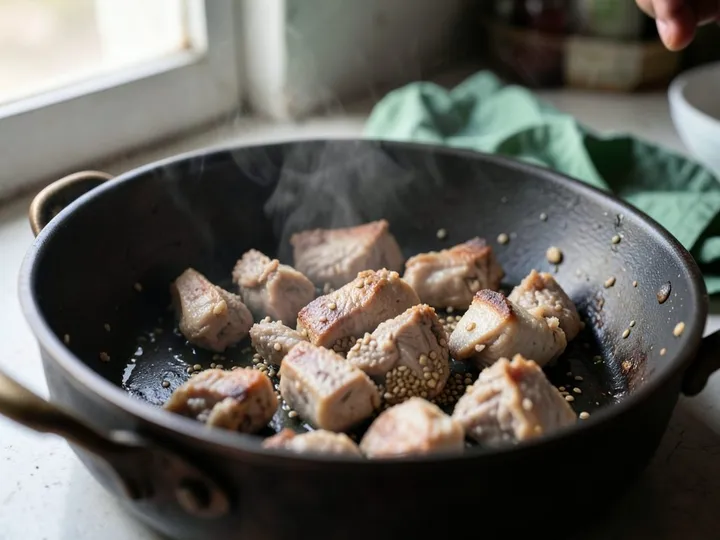
Add the drained rice and stir gently for 1 minute to coat the grains in ghee. Pour in the 550 ml of hot yakhni, bring to a boil over high heat and boil for 2 minutes, until the liquid sits just level with the rice and small craters appear.
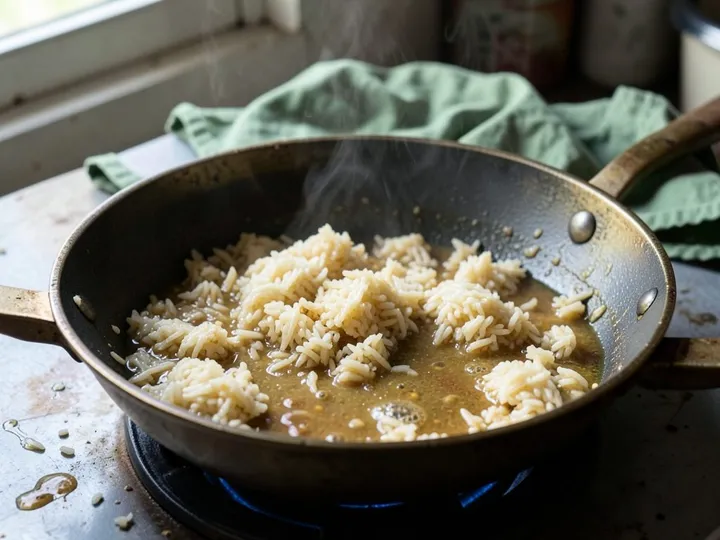
Cover with a tight lid, turn the heat to the lowest setting and cook for 12 minutes. Turn the heat off and leave covered for 10 minutes without lifting the lid. If the grains are still firm after resting, sprinkle 3 tbsp hot stock over, re-cover and leave on the lowest heat for 5 minutes.
Fluff the rice gently with a fork from the sides so the grains don't break. Fold through the coriander and mint and top with the reserved golden onions. Serve hot.
Swaps & substitutions
- Pressure cooker → Heavy covered pot for the yakhni: Simmer gently with the lid on for about 1 hour 30 minutes to 2 hours until the mutton is tender when pierced, topping up with hot water. Use 1.2 litres of water and reduce to 550 ml of stock.
- Mutton → Bone-in chicken thighs (500 g): Cook the yakhni for only 8 minutes under pressure. It makes a lighter, quicker pulao.
- Yogurt → No yogurt: A cleaner, stock-forward pulao, slightly less rich.
Storage & reheating
Cool within 1 hour and refrigerate in a shallow airtight container, as cooked rice can grow harmful bacteria if left warm. Keeps 2 days in the fridge. Reheat in a covered pan with a splash of water over low heat, or in the microwave, until steaming hot all through (74°C). Do not reheat more than once.
Frequently asked questions
What is yakhni?
Yakhni is a clear stock made by simmering meat, usually mutton, with whole spices, fennel, ginger and onion. In a yakhni pulao, the rice is cooked in this stock instead of plain water, which is where the flavour comes from.
Which style is this pulao?
A home-style adaptation: the muslin spice potli and browned onions follow Lucknowi (Awadhi) practice; the generous fennel nods to Kashmiri cooking; the pressure cooker is a modern shortcut.
Does yakhni pulao include yogurt or tomato?
Tomato isn't traditional. Yogurt is common in both Lucknowi and Kashmiri versions; here it's optional.
How much liquid per cup of rice?
For soaked basmati cooked covered, about 1.25 to 1.5 parts liquid to 1 part rice by volume. Here 300 g rice (about 1.6 cups) uses 550 ml, which is about 1.4 parts. Rest the pot for 10 minutes afterwards.
Can I use boneless mutton?
You can, but bone-in pieces give a much richer yakhni. If you use boneless meat, add about 200 g of mutton bones to the stock for body, and cook it for 20 minutes under pressure instead of 25.
How do I know the mutton is cooked?
Pierce the thickest piece: it should slide off the bone with little resistance. Well before that point it is far past safe temperatures. Goat is lean and tough, which is why it needs a long, moist cook before the rice goes in.
Nutrition
| Calories | 490 kcal |
|---|---|
| Protein | 27 g |
| Carbohydrates | 66 g |
| Fat | 13 g |
| Fibre | 2 g |
| Sodium | 970 mg |
More in Mughlai & Awadhi Recipes and Rice, Biryani & Pulao Recipes. Learn the technique: Indian Spices: A Practical Guide, The Indian Pantry: 25 Essentials.