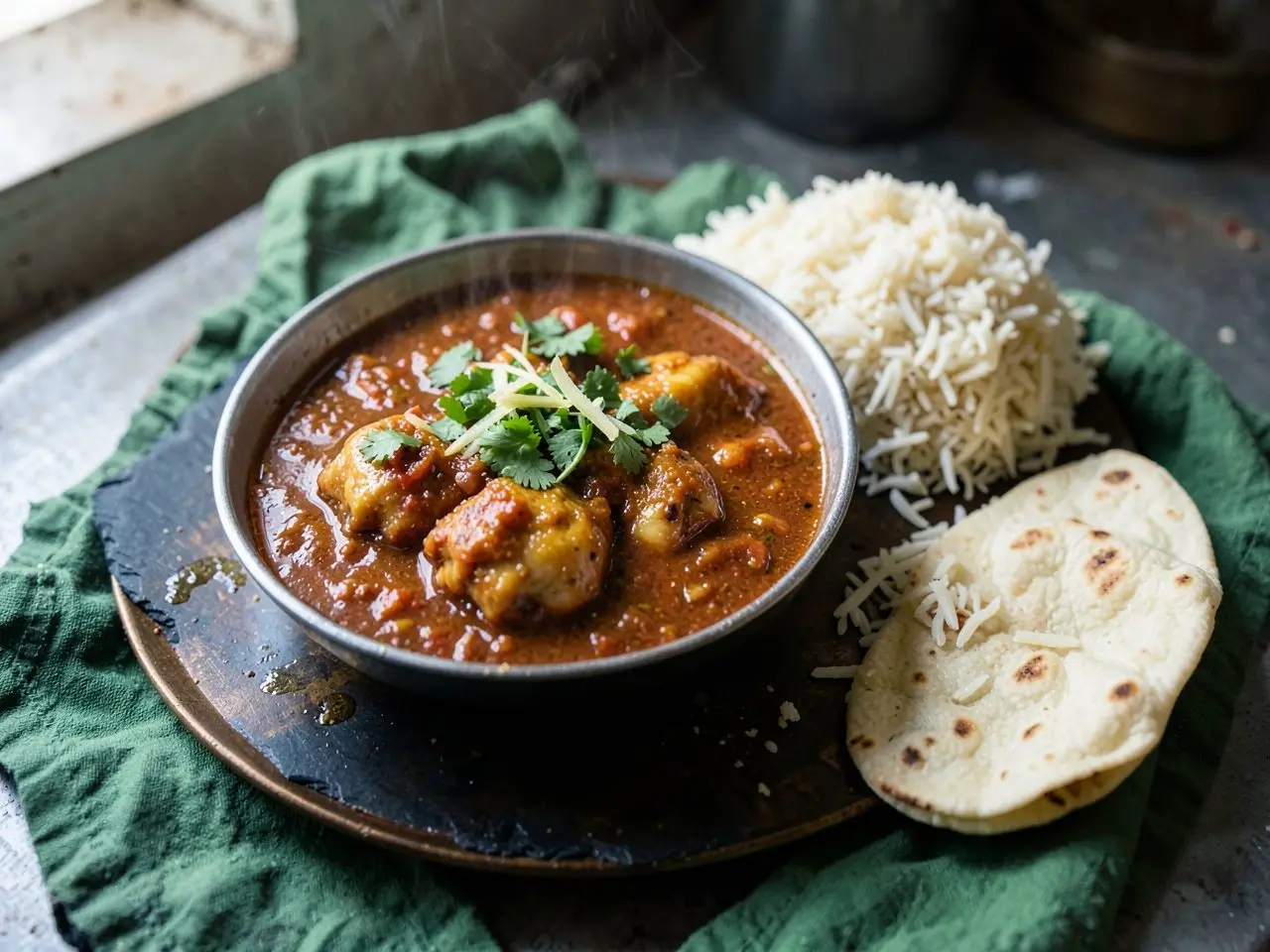
This is the style of curry served at the roadside dhabas of Punjab: unfussy, deeply savoury and built on patience rather than a long ingredient list. Slow-browned onions and a well-cooked tomato masala do most of the work.
Why this recipe works
- Slow-cooked onions caramelise their sugars, giving body and sweetness without cream.
- Bone-in thighs release gelatine as they simmer, so the gravy turns glossy and the meat stays juicy.
- Kasuri methi at the end adds the savoury, slightly bitter aroma people recognise from restaurant curries.
Method
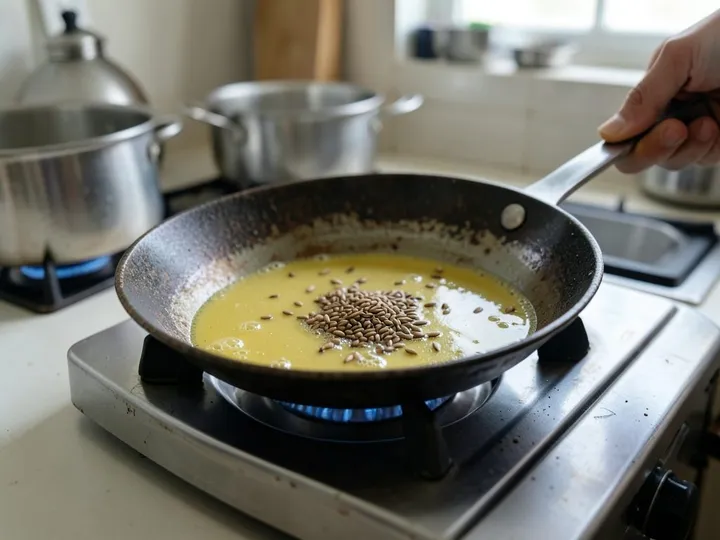
Heat the ghee in a heavy pot or kadhai over medium heat. Add the cumin seeds and let them sizzle and darken slightly, about 20 seconds.
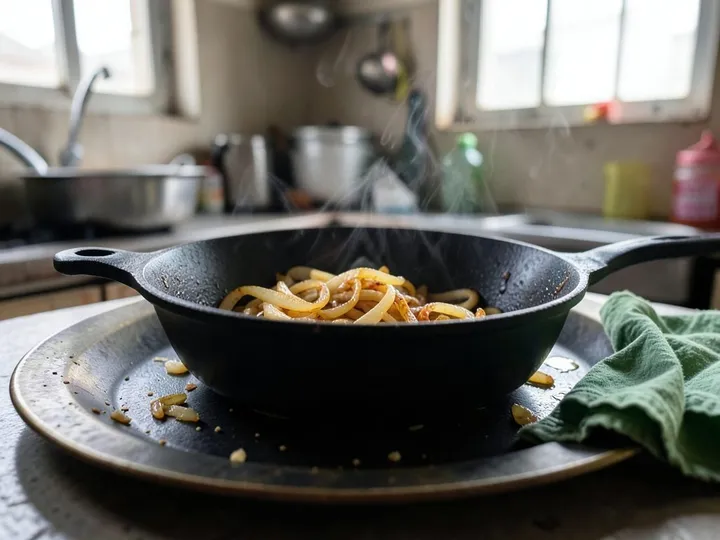
Add the sliced onions with a pinch of salt. Cook over medium heat, stirring every minute or two, for 12 to 15 minutes until deep golden brown at the edges and soft throughout.
Tip: If the onions catch, add a splash of water and scrape the base. That fond is flavour.
Stir in the ginger-garlic paste and cook for 1 minute, until the raw smell disappears and it just starts to stick.
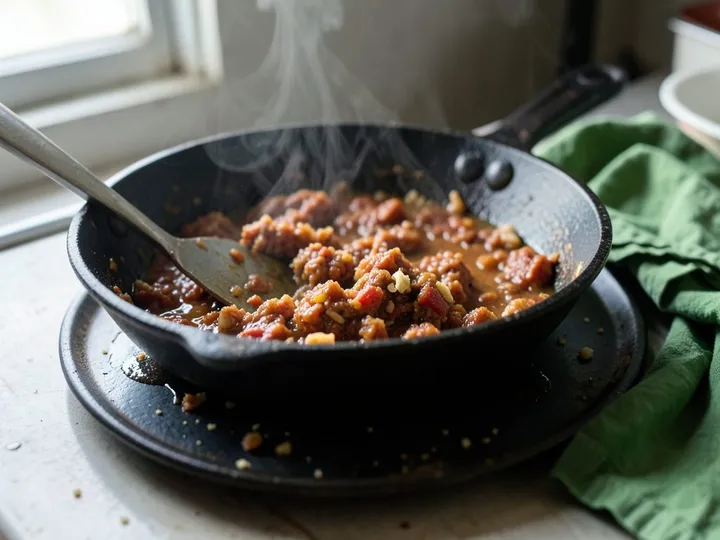
Lower the heat to medium-low. Add the chilli powder, coriander and turmeric, stir for 30 seconds (add 2 tbsp water if they start to catch), then pour in the tomato purée. Cook, stirring, for 8 to 10 minutes until thick and darker, with oil visibly separating at the edges.
Add the chicken and turn it to coat in the masala. Cook over medium-high heat for 5 minutes, turning, until the surface of the chicken turns opaque.
Pour in the hot water and the remaining salt and bring to a simmer. Cover and cook on low for 25 minutes, stirring twice, until the chicken is tender, juices run clear and the thickest piece reads 74°C (165°F) or higher.
Uncover, stir in the garam masala and the kasuri methi, and simmer 2 minutes until the gravy coats the back of a spoon. Taste for salt, scatter with coriander and rest 5 minutes before serving.
Tip: If the gravy is thin, simmer uncovered for 5 more minutes instead of adding any thickener.
Swaps & substitutions
- Bone-in thighs → Boneless chicken breast: Cut into large chunks and simmer for only 12 minutes. It is leaner and drier, so stop as soon as it reaches 74°C.
- Ghee → Mustard oil: Heat it until it just starts to smoke, then cool for 30 seconds before adding the cumin. It gives a sharper, pungent North Indian flavour.
- Fresh tomatoes → Canned crushed tomatoes: Use 300 g and cook 2 to 3 minutes longer, as canned tomatoes are wetter. Check the salt, since some cans contain it.
Storage & reheating
Cool and refrigerate within 2 hours. Keeps 3 days in an airtight container in the fridge and 2 months frozen. Thaw overnight in the fridge and reheat in a pan until steaming hot all the way through, with a splash of water if the gravy has thickened. The flavour deepens overnight.
Frequently asked questions
Can I use chicken breast instead of thighs?
Yes, but thighs stay juicier because they have more fat and connective tissue. If using breast, cut it into large chunks and simmer for only 12 minutes, until it reaches 74°C (165°F).
How do I make the curry less spicy?
Halve the Kashmiri chilli powder. It's mild and mostly colour; the other spices add aroma, not heat.
Why does my curry taste raw or sharp?
The masala was not cooked long enough. Keep cooking the onion and tomato base until oil visibly separates at the edges. This step, called bhuna, is what removes the raw edge of tomato and spices.
Can I make it ahead?
Yes, it tastes better the next day. Cool within 2 hours, refrigerate, and reheat until steaming hot.
What should I serve with Punjabi chicken curry?
Plain basmati or jeera rice, butter naan or tandoori roti, with sliced onion, green chilli and a wedge of lemon on the side.
Nutrition
| Calories | 341 kcal |
|---|---|
| Protein | 32 g |
| Carbohydrates | 17 g |
| Fat | 17 g |
| Fibre | 4 g |
| Sodium | 720 mg |
More in Punjabi Recipes and Indian Curry Recipes. Learn the technique: How to Make a Curry Base (Bhuna Masala), Indian Spices: A Practical Guide.