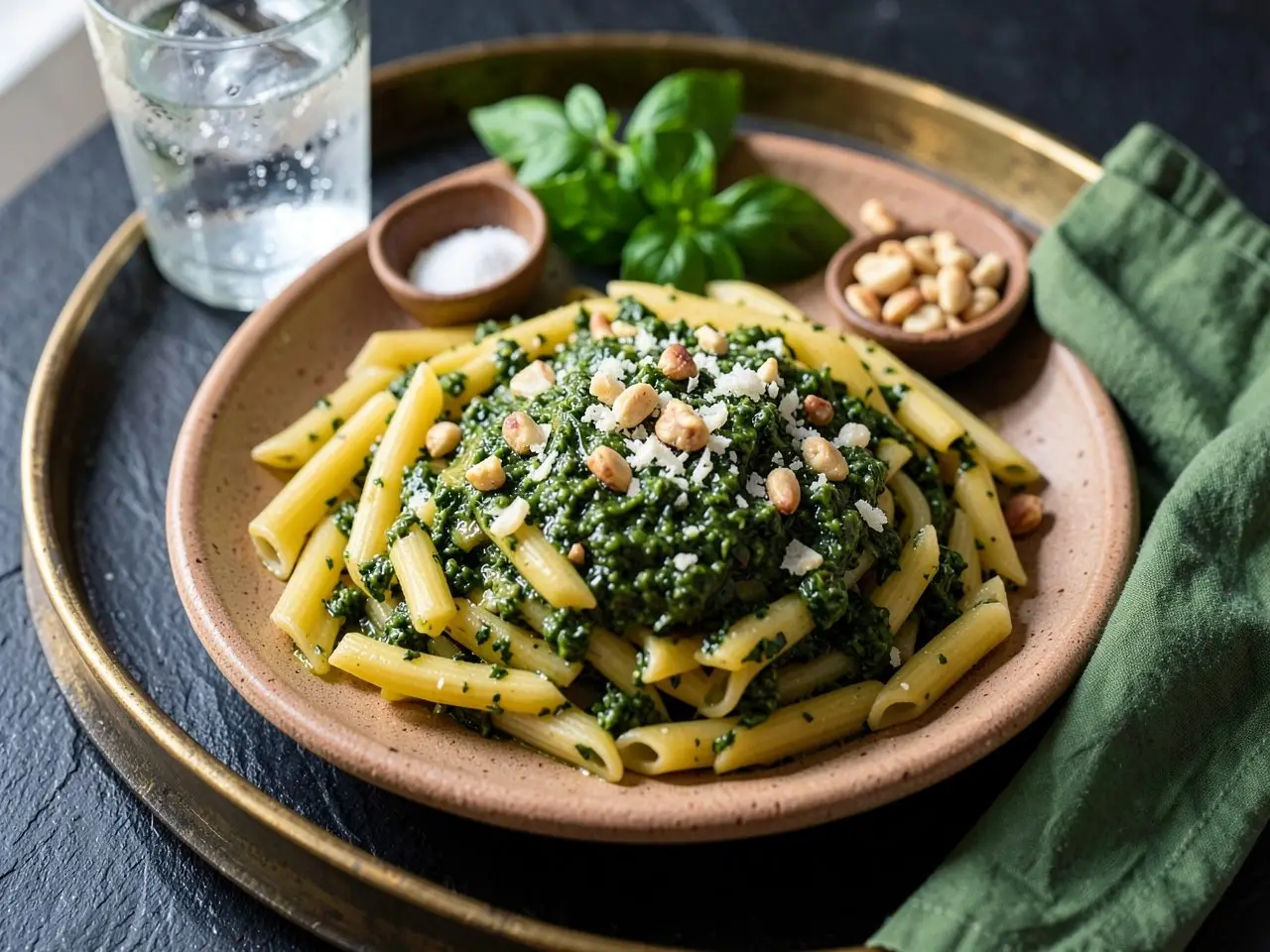
Pesto comes from Liguria in north-west Italy, where it is traditionally pounded in a mortar from basil, pine nuts, garlic, hard cheese and olive oil. This version uses a food processor for speed but keeps the same idea: nothing is cooked, and the hot pasta and a little of its water bring the sauce together.
Why this recipe works
- Toasted pine nuts add a rounder, buttery sweetness that balances the sharp raw basil and garlic.
- Cheese stirred in by hand, off the blades, stays creamy instead of turning gluey from processing heat.
- Starchy pasta water emulsifies the oil into a glossy sauce that coats the pasta rather than pooling at the bottom of the bowl.
Method
Bring the water and 2 teaspoons of salt to a rolling boil in a large pot. While it heats, toast the pine nuts in a dry pan over medium-low heat for 3 to 4 minutes, shaking often, until light gold and fragrant. Tip them onto a plate straight away, because they burn fast.
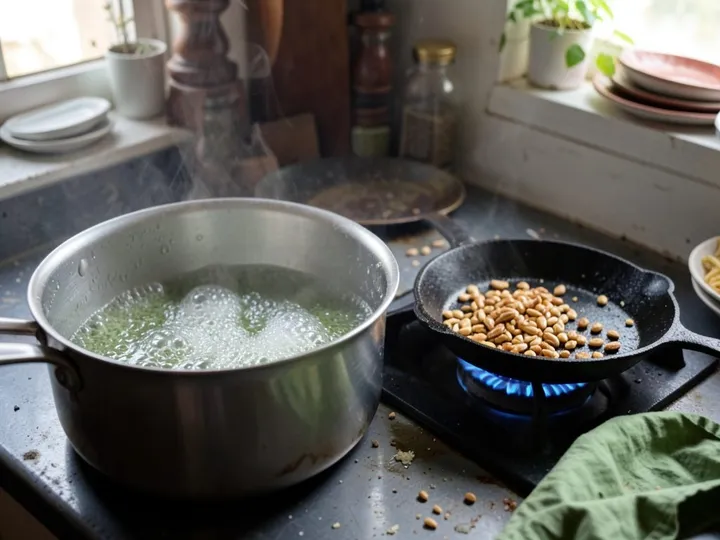
Optional, for the greenest pesto: dunk the basil in the boiling water for 10 seconds, lift it into a bowl of iced water, then squeeze it dry in a clean towel. Skip this for a more fragrant, slightly darker pesto.
Tip: Blanching sets the colour but mutes some of the aroma. Both versions taste good.
Pulse the basil, cooled pine nuts, garlic and ¼ teaspoon salt in a food processor in 1-second bursts until a coarse paste. With the motor running, pour in the olive oil in a thin stream and stop after about 20 seconds, while the pesto still has some texture.
Tip: Long blending warms the blades, which turns the basil dark and slightly bitter.
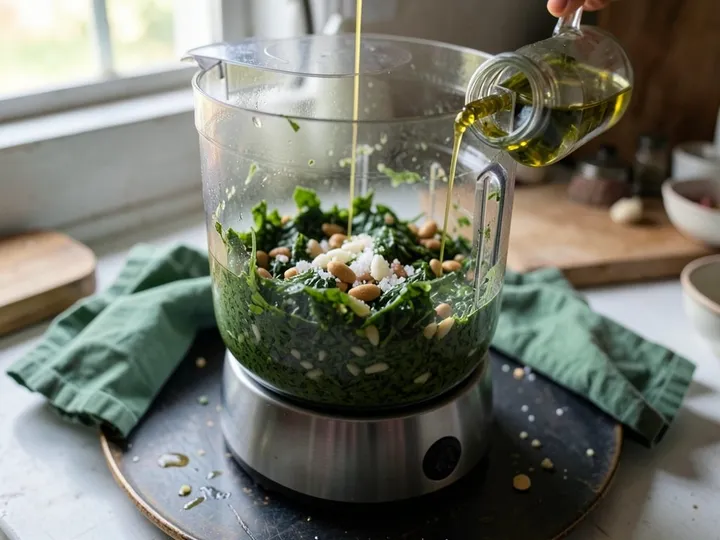
Scrape the pesto into a large serving bowl and stir in the grated cheese by hand. Adding it off the blades keeps the sauce creamy rather than gluey.
Cook the pasta in the boiling water for 1 minute less than the packet time, usually 9 to 11 minutes, until al dente with a small firm centre. Scoop out 120 ml of the cloudy cooking water with a mug, then drain. Do not rinse.
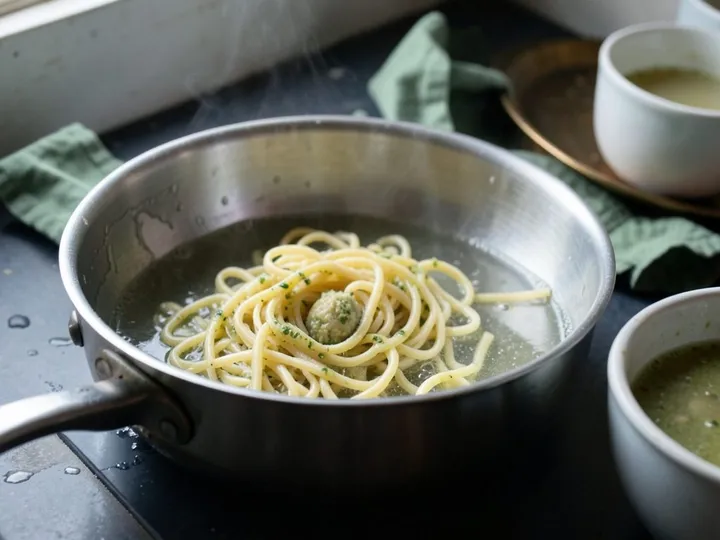
Add the hot pasta to the bowl with the pesto and 3 tablespoons (45 ml) of the pasta water. Toss hard for 30 seconds until the sauce turns pale, creamy and clings to every piece. If it looks tight or oily, add more water 1 tablespoon at a time.
Serve immediately in warm bowls. The pasta's own heat is enough to warm the sauce, so do not return it to the pan.
Swaps & substitutions
- Pine nuts → Walnuts or sunflower seeds (30 g): Toast them the same way. Walnuts add a slight bitterness; sunflower seeds are the nut-free option and taste milder and earthier.
- Parmesan-style cheese → Pecorino Romano (30 g): Pecorino Romano is also made with animal rennet, so it isn't vegetarian. It is saltier and sharper, so use less and leave out the pinch of salt in the pesto. For a dairy-free version, use 2 tablespoons nutritional yeast and taste for salt.
- Wheat pasta → Gluten-free pasta: Cook to the packet time and keep the cooking water, though it carries less starch, so add it a spoonful at a time and expect a looser sauce.
Storage & reheating
Keep leftover pesto in a clean airtight jar with a thin layer of olive oil on top, refrigerated, for up to 3 days. It freezes without the cheese for up to 3 months, with the cheese stirred in after thawing. Dressed pasta keeps 2 days in the fridge and is good cold or at room temperature. Reheat only gently with a splash of water, as strong heat makes the cheese grainy. Never keep garlic in oil at room temperature.
Frequently asked questions
Is pesto pasta vegetarian?
It depends on the cheese. Parmigiano Reggiano is always made with animal rennet, so it is not strictly vegetarian. For a vegetarian dish, use a hard Italian-style cheese labelled as made with microbial or vegetable rennet. The dish also contains dairy, tree nuts (pine nuts) and gluten.
Why did my pesto turn brown or taste bitter?
Basil darkens when it is bruised or warmed, so pulse briefly and avoid over-blending. Blanching the basil keeps the colour. A very strong, peppery extra virgin oil can taste bitter after processing, so use a mild one. Covering stored pesto with oil also slows browning.
Can I make pesto without pine nuts?
Yes. Toasted walnuts, almonds, cashews or sunflower seeds all work. Sunflower or pumpkin seeds are the options if you need to avoid tree nuts.
Why not heat the pesto in the pan?
Heat dulls the basil, turns it a brownish colour and makes the cheese clump. The hot pasta and a little cooking water warm the sauce enough, which keeps the flavour fresh and the texture smooth.
Can I freeze pesto?
Yes. Freeze it without the cheese in ice-cube trays, then bag the cubes and keep them for up to 3 months. Thaw in the fridge or in the hot pasta, and stir in the grated cheese at the end.
Nutrition
| Calories | 764 kcal |
|---|---|
| Protein | 23 g |
| Carbohydrates | 79 g |
| Fat | 40 g |
| Fibre | 4 g |
| Sodium | 837 mg |
More in Global Kitchen Recipes and Main Dishes.