 16 hr 5 minVegetarian
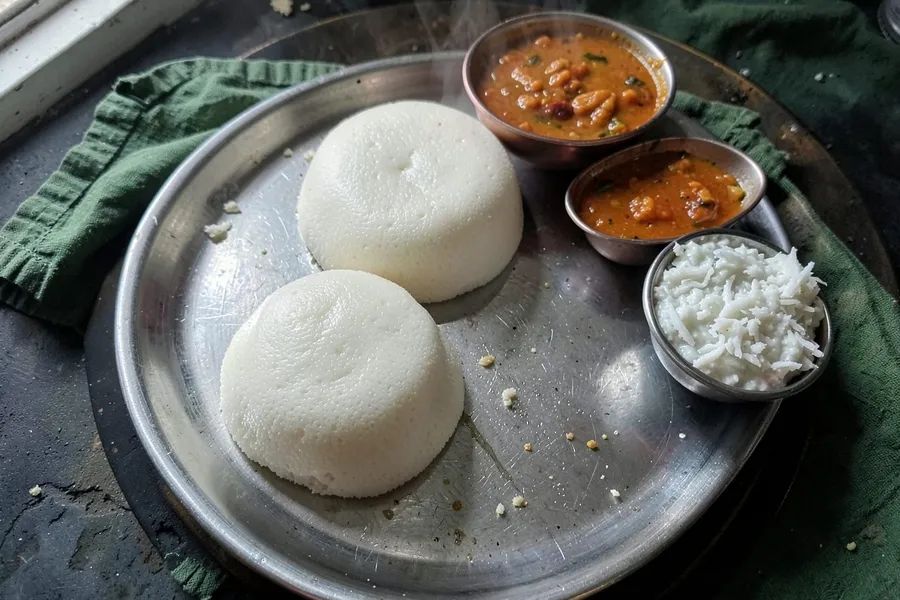
Idli with Coconut Chutney (Fermented Rice Cakes)
16 hr 5 min · Medium
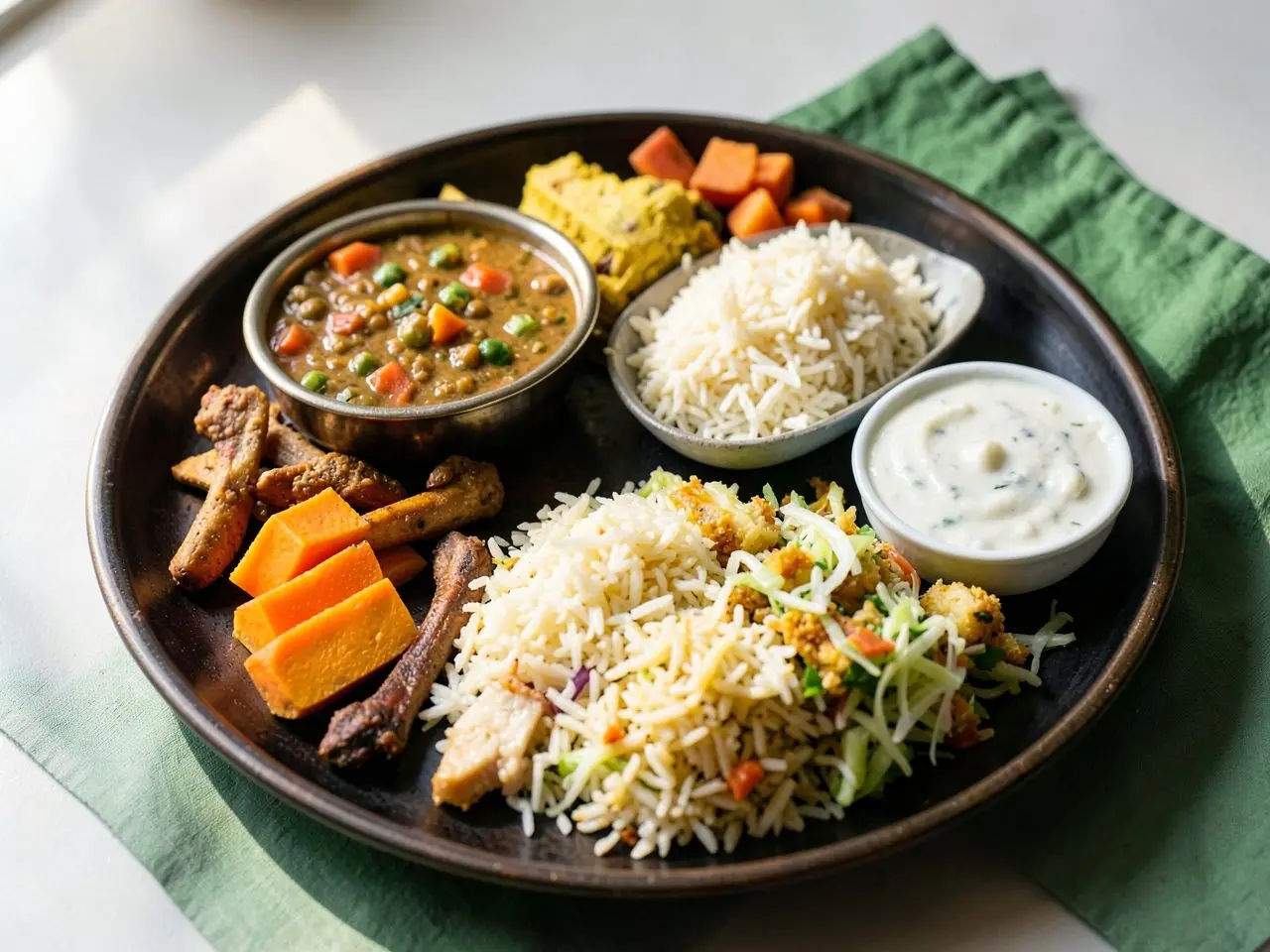
South Indian cooking spans Tamil Nadu, Kerala, Karnataka, Andhra Pradesh and Telangana, each with its own habits, but a few threads run through all of them: rice and lentils as the base, coconut and curry leaves for fragrance, tamarind and chilli for sourness and heat, and a tempering of mustard seeds sizzling in hot oil. The recipes here lean toward the everyday: breakfasts, tiffin dishes and a full thali-style lunch, rather than restaurant specials.
Tempering comes first, because it appears everywhere. Heat the oil, wait for the mustard seeds to crackle, then add dals, curry leaves and chilli in order, as in rava upma. Next is steaming and fermenting. Idli uses a soaked and ground batter of rice and urad dal, fermented overnight and steamed for 10 to 12 minutes into soft cakes. Third is working with semolina, which swells in hot water for upma or in curd batter for rava uttapam, a thick savoury pancake that needs no fermentation.
Spices matter too. The spices guide explains mustard seed, asafoetida, curry leaf and fenugreek, and how to keep them fresh.
If you want something ready in half an hour, cook rava upma or rava uttapam. If you enjoy a weekend project, make idli, which takes about 16 hours overall but only around one hour of hands-on time. For an all-in-one cooking session, the South Indian meal prep plan makes six lunches of sambar, lemon rice, cabbage poriyal and coconut chutney, with clear fridge and freezer limits for each component. Our roundup of Indian vegetarian breakfasts sets these dishes beside poha and besan chilla so you can compare timings.
Many of these dishes are vegetarian, and the vegetable-led ones suit a weekday as well as a weekend. Stock coconut, toor dal, urad dal, mustard seeds and curry leaves, and you can cook most of this hub. The pantry essentials guide shows what to buy and how to store it.
Rice, lentils (especially toor dal and urad dal), coconut, tamarind, curry leaves, mustard seeds and dried red chillies. Many dishes are vegetarian by tradition, built on steamed, fermented and tempered preparations.
Tempering, called tadka or tarka, means heating oil or ghee and frying mustard seeds, dals, chillies and curry leaves until they pop and smell nutty, then adding them to a dish. It layers aroma into upma, sambar, lemon rice and poriyal. Add the seeds only once the oil is hot.
Roughly 8 to 12 hours in a warm place. The batter should rise, look bubbly and smell pleasantly sour. In cold kitchens it can take longer, so look for the rise rather than watching the clock.
Yes. Sambar and dry vegetable poriyal keep about 4 days in the fridge, but rice should be eaten within 1 to 2 days or frozen. The meal prep plan sets out exactly what to chill and what to freeze.